
Greetings from the Redevelopment Zone
 After a week of public outrage and plans to protest in front of the Casino this weekend, the spin machine started turning. Madison Marquette, acting under the guise of the friendly "Asbury Park Boardwalk" social media account, issued a statement that's a masterclass in gaslighting. They claimed “due to forecasts for stormy and snowy weather, we conducted a special inspection,” which prompted the “unsafe” notice. They also claimed the fears of demolition were just "rumors" spread by social media "specters." They urged us to go grab a burger at the Wonder Bar and forget what we saw. “This is Asbury,” they say. Condescending horseshit.
We need to dissect this insult to our intelligence. First, let's talk about the messenger. This statement didn't come from Madison Marquette corporate. It came from an unsigned social media post on a brand handle, sandwiched between ads for happy hour. They want you to think this is your friendly neighborhood boardwalk talking, not a private equity firm covering its assets. It's a classic corporate shield: hide the suit behind the logo so no one has to take personal responsibility for the lie.
And it is a lie. Calling a documented demolition permit application a "rumor" is the height of arrogance. We can read. The City Council can read. You don't file legal paperwork with the city to tear something down because of a "specter." Would they have us believe that Joseph J. Maraziti, Jr., the redevelopment counsel for the City, was publicly reacting to a rumor? To frame the City's valid outrage as hysteria is a sort of Jedi mind trick, and a sloppy one at that.
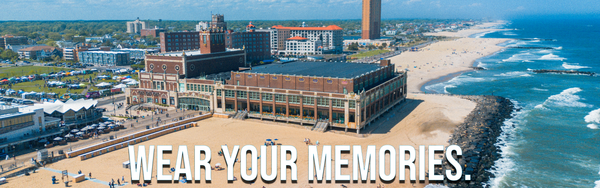
Their statement was a word salad designed to confuse the issue (the outdoor path will reopen when the indoor path reopens?). These buildings have been abandoned and exposed to the elements for DECADES. What type of weather is grounds for inspection? Only the Casino was inspected? They didn't mention Convention Hall. The building with the exposed steel skeleton where the copper used to be. Is there "no concern" there? Or are we just waiting for the next "stormy forecast"?
On June 30, 1999, Governor Christine Todd Whitman signed the Garden State Preservation Trust Act into law. It was a legislative firewall built to protect the soul of New Jersey, creating a dedicated funding source to save open space, farmland, and historic sites from the bulldozer. Its purpose was clear: to ensure that the physical evidence of our history would survive for future generations. Because of this Act, the Cape May Lighthouse, the majestic Loew's Jersey Theatre in Jersey City, and the iconic Lucy the Elephant in Margate still stand today. They were saved because the state recognized that once history is gone, you cannot buy it back.
The Asbury Park waterfront isn't just a local asset... it's a global one. Few American cities have exported culture at this scale, born from James Bradley’s vision of a civic center on the sand that rivals the great public spaces of Europe, a unique architectural pedigree that exists nowhere else on the Atlantic seaboard. But beyond the bricks and mortar, this city changed the world. The music that poured out of these venues didn't just entertain locals; you don't have to be a fan of the music to recognize that Bruce Springsteen introduced the entire world to the Asbury Park iconography now universally associated with his image. In this sense, Asbury Park belongs on the same list as Liverpool, Nashville, and New Orleans. To allow its physical destruction is an insult to American culture itself.
These structures weren't standard boardwalk fare; designed by Warren and Wetmore, the same architectural geniuses behind Grand Central Terminal, the Casino and Convention Hall are Beaux-Arts masterpieces of limestone and copper that created a "Riviera" style unique to this coast. Even the Heating Plant was built as a temple to industry, a utilitarian structure given the same architectural dignity as the theatres it powered, standing today as a skeletal monument to that ambition. There is a profound hypocrisy in the State's inaction regarding these ghosts. Visit the New Jersey Division of Travel and Tourism website right now and you will see a huge banner image of Convention Hall. The State monetizes the aesthetic of "grit and glory" to attract tourists, yet they stand by while the physical structures are ruined by neglect.
New Jersey can continue the ineffective and wasteful practice of passive check-writing, or it can use the tools the legislature gave it. It works like this: The State has the authority to seize the property through Eminent Domain (something this state is not shy about using...ask Long Branch). This gives the state the legal authority, provided they establish a clear "public use" to protect our cultural heritage. The Garden State Preservation Trust Act is the checkbook that would fund it. This law does not just exist to buy farmland in the western counties. Under N.J.S.A. 13:8C-2, it explicitly declares that the preservation of "historic properties" is a "paramount policy of the State," creating the funding stream necessary for the DEP to execute a taking. While eminent domain requires "just compensation", a figure the developer will surely try to inflate, the State must argue that the "fair market value" of a neglected ruin cannot be based on the developer’s unfulfilled luxury fantasies.
The Act is designed for exactly this moment. When a historic site faces an imminent threat, and an "unsafe structure" notice triggered by "demolition by neglect" is the definition of an imminent threat, the State has both the power to condemn the property and the dedicated funds to pay for restoring it.
Beyond the statutes, there is the undeniable leverage of the purse. The State is already an equity partner in this failure, having funneled $20 million to Asbury Park through the 2024 Boardwalk Preservation Fund. We need to be clear about what that money is: unlike the permanent, state-funded Garden State Preservation Trust, this was a $100 million injection of federal American Rescue Plan money explicitly earmarked for "removing blight" and "mitigating abandoned properties." While these funds are reportedly being used for the Paramount Theatre, that cash comes with significant strings. Under the oversight of the State Historic Preservation Office (SHPO), you cannot take state cash to "stabilize" one part of the waterfront while actively permitting the decay of another part of the same historic district. The State isn't a silent ATM... it's an investor with preservation rights and the power to trigger clawback provisions. No Governor wants to look like they were swindled. By failing to maintain the other historic sites in the City, the developer is devaluing the very district the State paid to preserve. The governor has the power to freeze all current and future funding until a comprehensive preservation plan is not just signed, but executed. Money talks, and right now, the State is the only one with a megaphone loud enough to be heard.
The City of Asbury Park has had twenty years to fix this. They signed the developer contracts. They accepted the "stolen copper" excuses. They watched the "Lido" tower rise and Yappy Hour fall. The time for local politics is over. The State can and should use the funds from the Garden State Preservation Trust Act and the authority of the DEP to seize the Casino, the Power Plant, and the Convention Hall complex....take them out of the hands of iStar and Madison Marquette and place them in a public trust where they belong. Doing so saves Asbury Park a long, costly legal battle, and conveniently gives local officials the ability to shrug their shoulders at Madison Marquette and blame Trenton.
Or maybe I'm barking up the wrong tree. I've researched, Googled, ChatGPT'd and Newspaper.com'd everything I could find about the Garden State Preservation Trust Act, Eminent Domain and the Boardwalk Preservation Fund. Full restoration of Convention Hall, the Paramount Theatre, the Casino/Carousel and the Heating Plant would be the biggest preservation project undertaken by the State to date. Most likely too big, and too expensive. I'm not an engineer, lawyer, activist or civic leader. And my Italian temperament disqualifies me from politics. But maybe, if the State were to take control under the auspices of the Preservation Trust Act, some version of Henry Vaccaro Sr.'s non-profit coalition could be resurrected to help out. And wouldn't it be nice to see Eminent Domain used to preserve history for a change?