
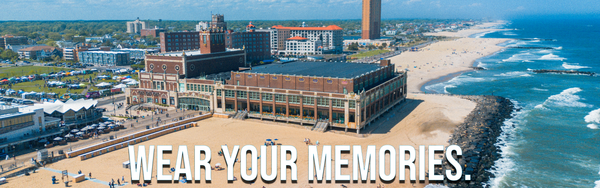
Selling the Ghost of Asbury Park

 They sell you the ghost. That is the great irony of the Asbury Park "revitalization." Developers iStar Financial and Madison Marquette market the grit, the history, and the rock and roll mythology of this city to sell million-dollar condos. Yet, for nearly twenty years, they have engaged in a calculated, cynical campaign to let the physical manifestations of that history rot into the Atlantic Ocean.
We have reached the terminal phase. The January 2026 application to demolish the Casino Breezeway is not an unfortunate necessity caused by time and tide. It is the inevitable result of a strategy known as "demolition by neglect." It is a breach of contract, a betrayal of the public trust, and if we do not stop it now, the Asbury Park of legend and the boardwalk empire will exist only on the vintage postcards sold in the gift shops of glass towers.
To understand why the Casino is crumbling today, you must examine the calculated "paperwork" of 2007 and, more critically, the 2010 Subsequent Developer Agreement (SDA). This arrangement was never a fair fight; it was a structure designed to fail by slicing the baby in half. iStar Financial, operating not as builders but as a hedge fund waiting out the apocalypse, retained the "gold": the lucrative residential land. Meanwhile, Madison Marquette was handed the "lead": the high-cost, low-margin historic "jewels" like the Casino, Convention Hall, and the Heating Plant.
Under Section 3.02 of the SDA, Madison Marquette explicitly agreed to "diligently undertake" the maintenance of these landmarks in exchange for boardwalk retail rights. Instead, they locked the doors and let the salt air eat the steel. By separating the high-profit condo sales from the costly historic preservation, the developers ensured these landmarks would be starved of funding. The current demolition application is the smoking gun of a fifteen-year breach of this specific clause. They harvested profits from the boardwalk while willfully ignoring their contractual obligation to preserve the structure, effectively manufacturing the very "unsafe" conditions they now cite as the excuse to destroy it.
We have seen this movie before. The 2004 demolition of the Palace Amusements was the original trauma. We were told the building was "too far gone." We were promised that the artifacts, specifically the iconic "Tillie" mural, would be saved and reintegrated. That was a lie. Two decades later, Tillie sits in a parking lot, wrapped in plastic, rotting away. The developer traded a landmark for a promise, destroyed the landmark, and broke the promise. There is no reason to believe the current crisis with the Casino will end differently.
If you want a snapshot of the stewardship provided by these developers, look at the Convention Hall copper theft of 2011. Thirty-four massive, antique copper panels vanished from the complex. Madison Marquette claimed they removed them for "inspection" and stored them in an unsecured pavilion. They were stolen. The developer waited months to tell the City. The panels were never replaced. The insurance money was claimed. The building continued to decay until the City had to declare the Paramount Theatre unsafe in 2021. It took a $20 million bailout from the state in 2025 to do the job the private developers were contractually obligated to do themselves.
Make no mistake: Convention Hall is currently following the exact same trajectory as the Casino. The salt air does not pause for grant applications. If the City allows the Casino to be demolished because it became "unsafe" through negligence, they are handing the developers a blueprint for the destruction of Convention Hall. Why would Madison Marquette spend millions to restore a low-margin theater when they can simply wait five more years, let the roof fail completely, slap a red sticker on the door, and claim they have no choice but to clear the site for a boutique hotel? The "unsafe" designation is not a warning; it is the goal. We are subsidizing their negligence with public funds, patching a sinking ship while the captain waits for it to go under so he can collect on the wreckage.
Now we arrive at January 2026. The developers have filed to demolish the Casino Breezeway. They point to the "Unsafe Structure" stickers on the windows as proof that they have no choice. Do not be fooled. The building is unsafe because they made it unsafe. For fifteen years, they ignored the SDA. They ignored the roof leaks. They ignored the rusting rebar. This is the "Dead Hand" strategy: You hold a property, refuse to maintain it, wait for it to become a public hazard, and then throw up your hands and say, "Safety first!" It allows them to bypass preservation boards and clear the land for what they really want: new construction.
The official response from the City of Asbury Park was unprecedented in its ferocity. Redevelopment counsel Joseph J. Maraziti, Jr. issued a searing statement accusing Madison Marquette of a "shocking disregard" for the city's treasures and noting a "pattern of behavior" that disrespects the city's heritage. But there is a bitter irony in this outrage. For nearly twenty years, the City Council and Planning Board have largely ignored the warnings of residents who predicted exactly this outcome. It is insanity that this moment marks the first time in two decades that the municipal government has finally aligned its rhetoric with the frustration of its constituents. Even more absurd is the feigned shock of city officials. Anyone who claims to be surprised by this demolition application has been willfully blind. You do not watch a roof collapse for fifteen years and then gasp when the owner asks for a wrecking ball. The application was not a surprise. It was the plan.
The Stone Pony is not safe. Do not doubt it. The encroaching luxury condos on the waterfront are creating a demographic that will not tolerate the noise of the Summer Stage. The leaked plans to move the stage to the Casino site are a Trojan Horse. They solve two problems for the developer. First, it gives them an excuse to gut the Casino. Second, it clears the prime oceanfront lot where the Summer Stage currently sits, making way for yet another residential tower.
If you want to see Asbury Park's future, look five miles north to Long Branch. The oceanfront there has been rendered unrecognizable, buried under an avalanche of stucco condos and "upscale" dining and shopping destinations. There is no trace of the history of Long Branch left. Nothing. It is a soulless landscape, an eyesore for anyone who has any love for this area. It is a cautionary tale written in concrete, a place where the unique character of the community was not just gentrified, but obliterated. This is the blueprint iStar has on the table. They do not want to save Asbury Park, they want to turn it into Long Branch South.
Thomas De Seno, Esq., a local attorney and sworn expert witness on Asbury Park history, who spearheaded (albeit unsuccessfully) the legal challenge to save the city's historic Holy Spirit Church, has long been sounding the alarm. He had attempted to fight back with the only weapon that matters: the law. De Seno correctly identified long ago that the developers were in default. The City has always had the power to revoke their development rights. What have they been waiting for?
We pinned our hopes on the "Save Asbury Park's History" non-profit, and for good reason. This wasn't a social club, it was a boardroom of heavyweights led by Henry Vaccaro Sr. His directors included news anchor Ernie Anastos, Bruce Belfer of Lighting Manufacturing, and Charles Lada, the retired CFO for Cruz Construction. The roster was rounded out by Philip Michals, CEO of Alliance Global, local developer Carter Sackman, and entrepreneur Beth Stavola of the prominent Stavola family. This was a team with the influence and expertise to hold the line. Yet, that firewall had already crumbled. Vaccaro's organization fought valiantly to hold the developers accountable, but their legal efforts failed for a specific and devastating reason: lack of standing. The courts ruled that the redevelopment contract (SDA) is strictly between the City and the developers, meaning that private citizens and non-profits, no matter how deep their pockets or qualified their leadership, have no legal authority to enforce its terms. This ruling effectively stripped the community of its ability to intervene, leaving the fox in charge of the henhouse and confirming that only the City has the power to stop the demolition...a power they have resisted using to date.
We are at an inflection point. If the Breezeway falls, the rest of the Casino will follow. If the Casino falls, Convention Hall will be next. If Convention Hall falls, the Stone Pony will move. If the Pony moves, the transformation will be complete. We will be left with a sanitized, generic luxury resort that wears the skin of a rock and roll town. It is time for Asbury Park to finally assert control over this situation.
I am aware of the irony. I run a business that sells t-shirts of Asbury Park landmarks that no longer exist. Some might ask: "Aren't you selling the ghost, too?"
There is a fundamental difference between a tribute and a tombstone. I grew up in a middle-class family, the son of an Asbury Park small business owner...who was also the son of an Asbury Park small business owner. This goes back generations. I know how easily a lifetime of hard work can disappear when the wrecking ball swings. My goal with Jersey Shore Memories isn't just to sell a shirt; it’s to curate an archive. In many cases, the designs on my site are the only physical evidence left that those mom-and-pop businesses ever existed. I am trying to keep these names in circulation, to keep them spoken, to ensure they remain part of our collective memory. The developers are using our history to sell a lifestyle while actively erasing the physical structures that created it. I sell memories to keep them alive. They sell memories to replace them.
Save the Casino. Save Asbury Park.
Rudy Falco